
What We’ve Learned from the Wrexham Poverty Action Collaboration Assembly

Community organising is often associated with campaigns, meetings, and public action. But before any of those things happen comes something equally important: listening.
The Wrexham Poverty Action Collaboration (WPAC) Assembly brought together people with lived experience of poverty, community organisations, charities, and local partners to do more than simply identify problems. It created the space for people to think together, challenge ideas, and discover practical solutions collectively.
One of the most striking lessons from the day was how quickly conversations changed once people were given the opportunity to deliberate.
Many people arrived with understandable frustration about the challenges facing individuals and families experiencing poverty. Yet as conversations developed, the focus naturally shifted. Instead of asking why someone else wasn’t solving these problems, participants began asking what they could achieve together.
That change in perspective is one of the greatest strengths of deliberative community organising.
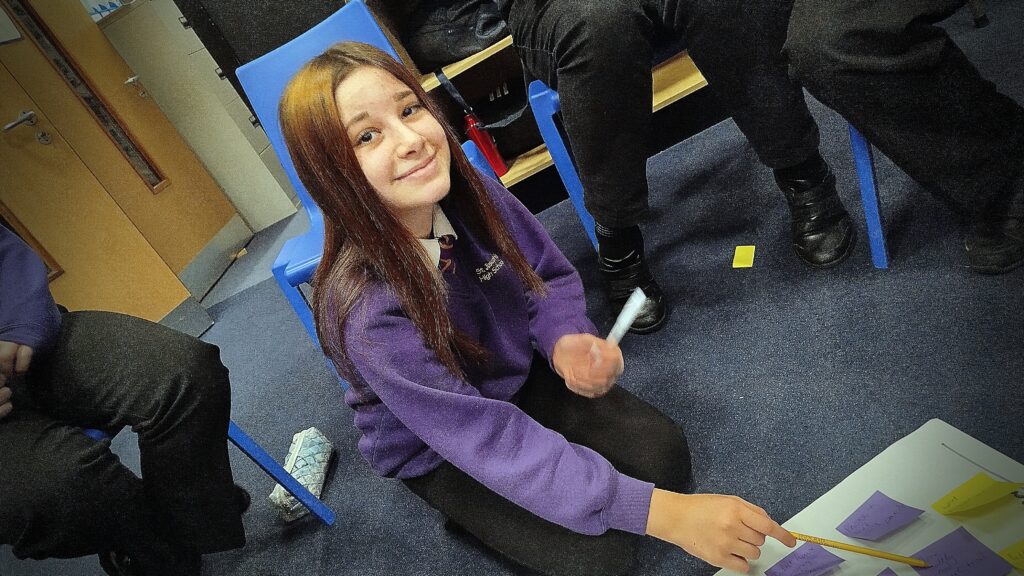
Using the Popular Assemblies model developed by The Humanity Project, participants worked through structured conversations designed to ensure every voice could be heard. Rather than the loudest voices dominating discussion, people listened, reflected, built on one another’s ideas, and collectively identified priorities for action.
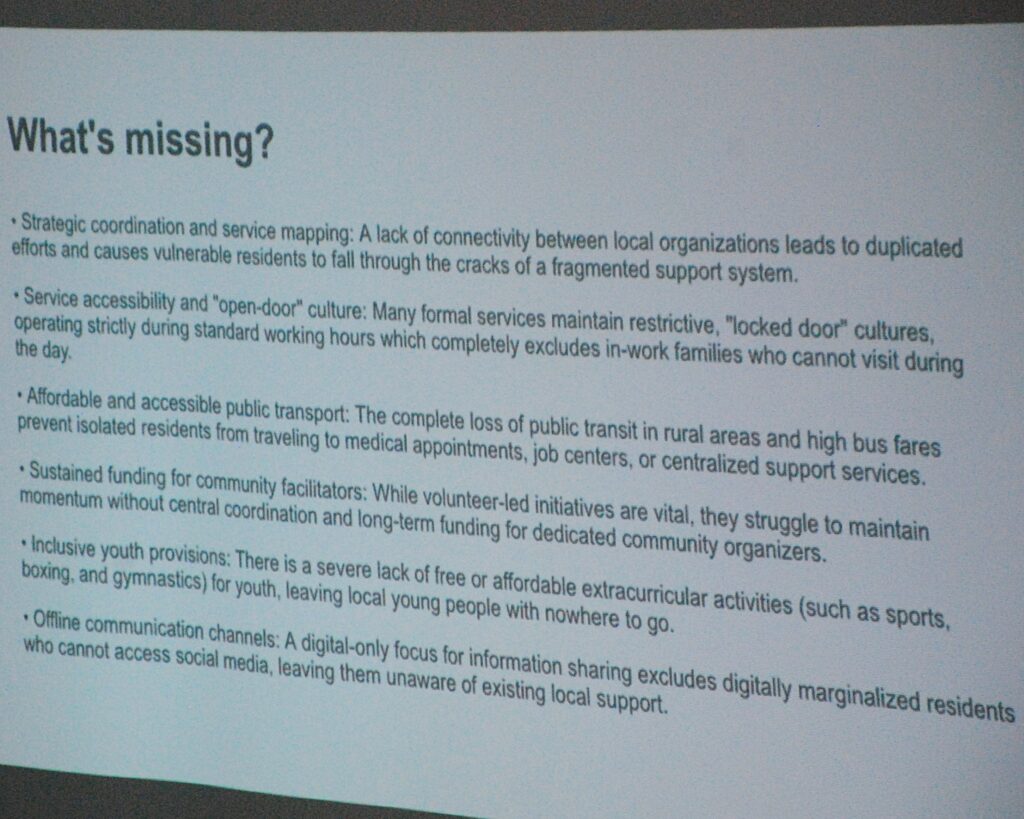
Technology also played an important role. Using Denbrane, conversations from across the room could be captured and analysed in real time, allowing everyone to see emerging themes as they developed. Rather than replacing discussion, the technology strengthened it by ensuring every table contributed equally to the wider conversation.
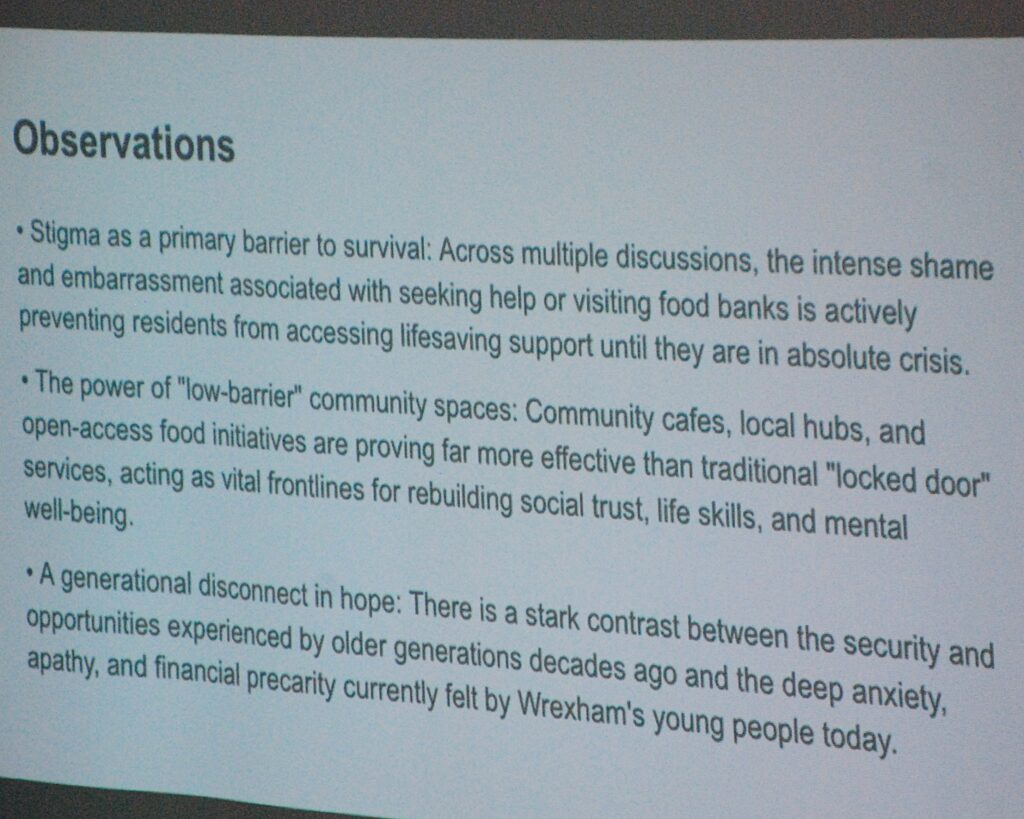


Perhaps the biggest lesson from the assembly was that communities already possess an enormous amount of knowledge, creativity, and experience. The challenge is not finding solutions on behalf of communities, but creating spaces where those solutions can emerge naturally.
This approach reflects TCC’s belief that lasting change is built with communities, not delivered to them.
For people with lived experience of poverty, the assembly offered something different from a traditional consultation. Participants weren’t simply asked to describe the difficulties they face—they were invited to shape priorities, explore solutions, and influence the direction of future campaigning.
Those conversations are already helping to inform the ongoing work of the Wrexham Poverty Action Collaboration and reinforcing the principle that lived experience should sit at the heart of decision-making.
The assembly reminded us that democracy is about more than voting every few years. It is about creating meaningful opportunities for people to come together, listen deeply, deliberate respectfully, and act collectively.
When communities are trusted with that responsibility, remarkable things can happen.
As TCC continues to support community organising across North Wales, this is perhaps our biggest lesson so far:
Communities don’t need someone else to provide all the answers. They need opportunities to discover the answers they already hold together.


Responses