
Young people want to be heard – and to help shape the solutions

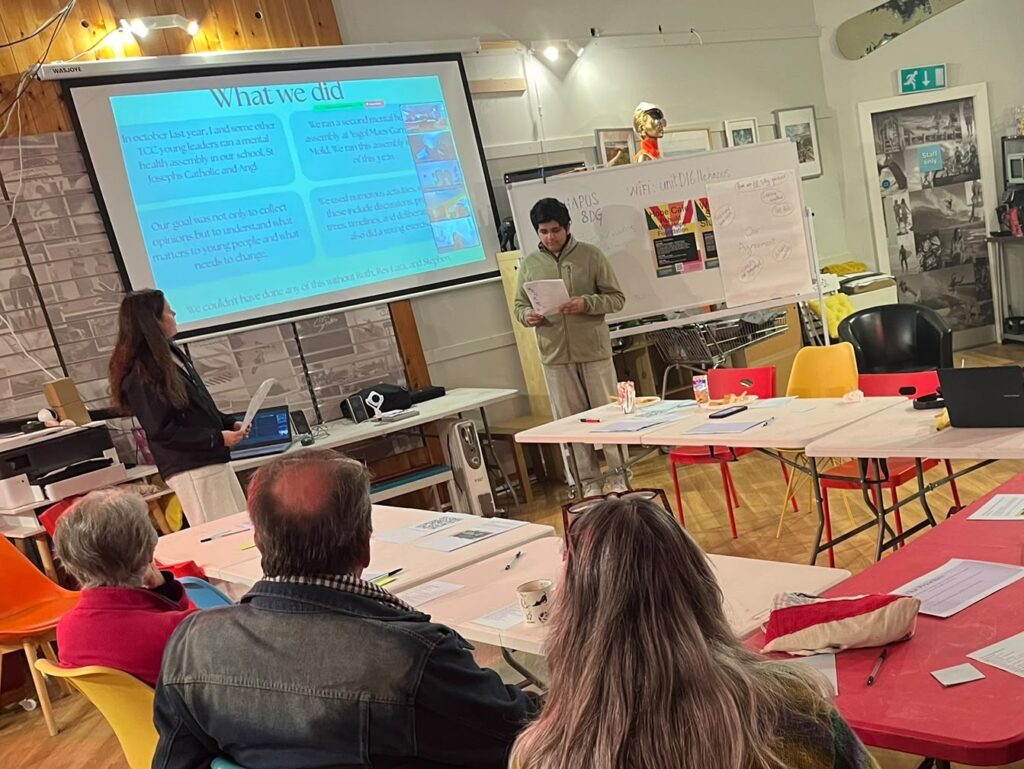
TCC Youth Leaders Phoebe and Anex took the findings of their mental health assemblies to TCC’s November Strategy Meeting, sharing what young people told them and asking organisations how they can help turn those messages into action.
What matters most to young people when it comes to their mental health? And what do they feel needs to change?
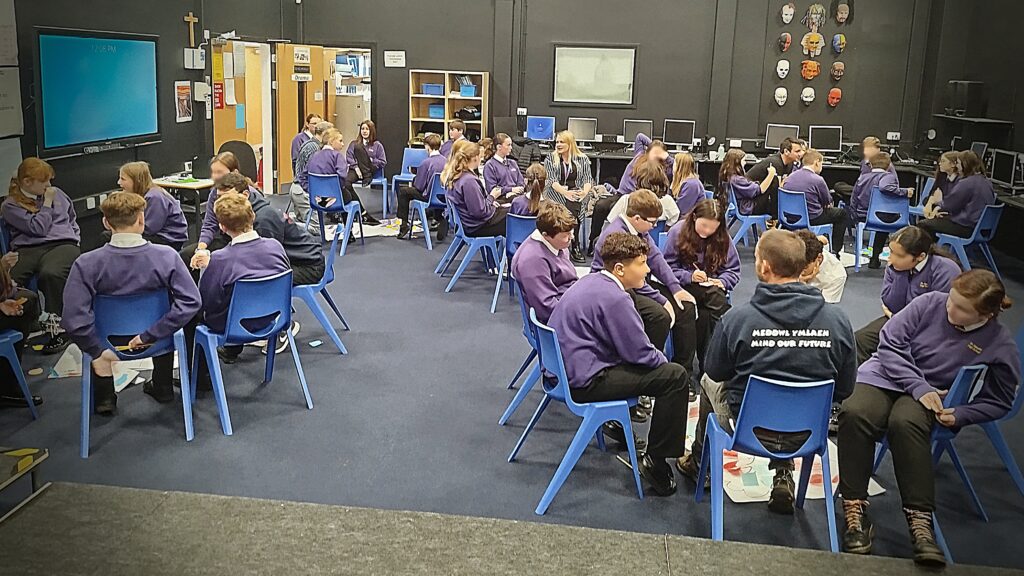
These were the questions explored by TCC Youth Leaders from St Joseph’s Catholic and Anglican High School, through two mental health assemblies involving young people in Wrexham and Mold.
At TCC’s November Strategy Meeting, Youth Leaders Phoebe and Anex presented what they had been doing, what they had learned and what they want to work towards next. Their presentation gave those attending an opportunity to hear directly from young people and consider how organisations can support their priorities.
Listening to young people
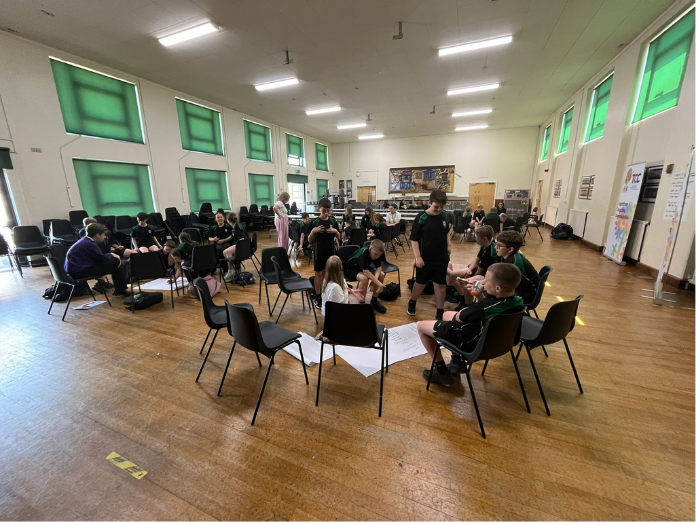
The first mental health assembly took place at St Joseph’s in October 2025, organised by TCC Young Leaders. A second assembly followed at Ysgol Maes Garmon in Mold in May 2026.
The purpose was not simply to collect opinions, but to understand what matters to young people and what they feel needs to change.
The assemblies used a range of activities to encourage participation and discussion, including problem trees, timelines, deliberation and voting. These approaches helped young people explore the issues affecting their mental health and wellbeing, rather than just being asked to identify problems.
Phoebe and Anex were clear that the work would not have been possible without the support of Ruth, Rev Lara and Stephen.
What young people told us
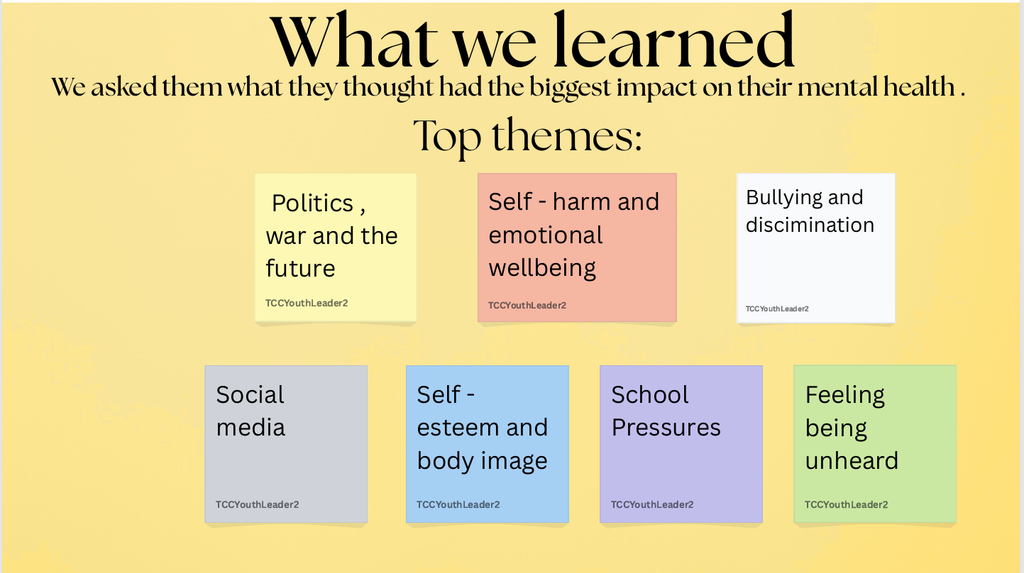
The findings highlighted a wide range of concerns, from pressures at school and on social media to bullying, discrimination, self-esteem and emotional wellbeing.
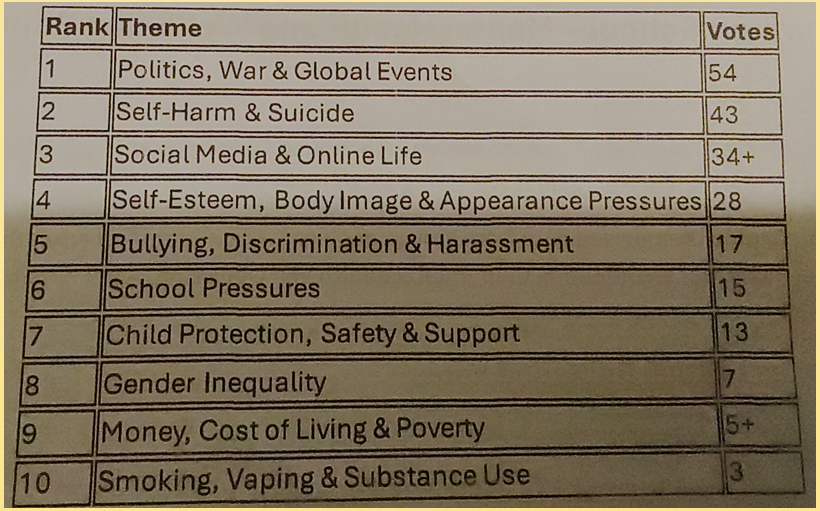
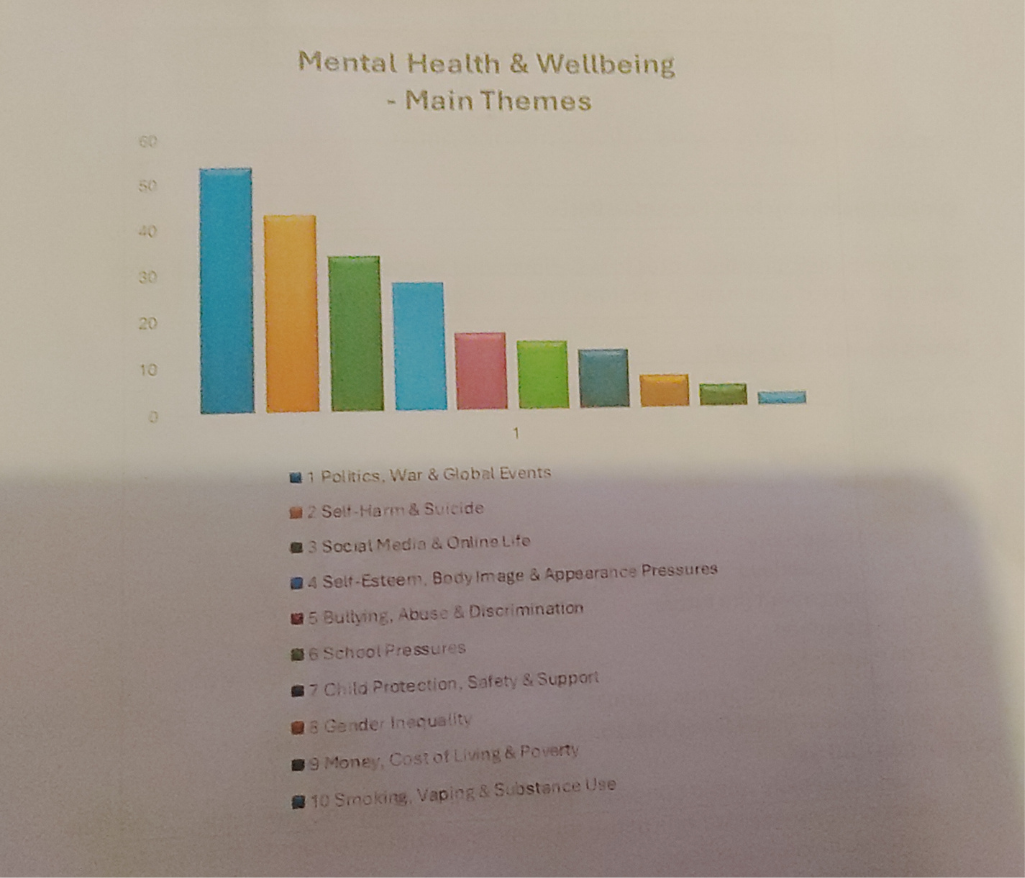
The strongest theme in the voting was politics, war and global events, which received 54 votes. This was followed by:
- Self-harm and suicide – 43 votes
- Social media and online life – 34+ votes
- Self-esteem, body image and appearance pressures – 28 votes
- Bullying, discrimination and harassment – 17 votes
- School pressures – 15 votes
- Child protection, safety and support – 13 votes
- Gender inequality – 7 votes
- Money, cost of living and poverty – 5+ votes
- Smoking, vaping and substance use – 3 votes
The presentation also highlighted that Donald Trump received 42 votes as an individual concern – the highest number recorded for an individual issue across the assemblies.
But alongside the issues themselves, one message stood out. Young people felt that adults were not listening to their concerns or problems.
That is an important finding. It suggests that understanding young people’s mental health means looking beyond services and support alone. It also means taking seriously the wider pressures they experience, and making sure they have meaningful opportunities to be heard.
Three messages – and three priorities
Drawing together what they had heard, the Youth Leaders identified three key messages:
- Young people want more influence.
- Young people want support before crisis.
- Young people want communities where they feel they belong.
They also set out three priorities for their next steps:
- Finding out more about young people’s experiences of youth mental health services.
- Helping young people tackle issues before they reach crisis point.
- Developing something practical to address the findings.
These priorities provide a direction for the work ahead, building on what young people have already shared.
What can organisations do?
The presentation was not simply an update on completed activity. Phoebe and Anex brought their findings to the Strategy Meeting with questions for the organisations and community groups attending.
They asked which of their priorities connected most strongly with the work of those organisations, what resources, opportunities or connections they could offer, and which decisions being made should involve young people.
Most importantly, they asked:
What practical commitment can your organisation make?
It was a direct invitation to move beyond recognising the importance of youth voice and consider how that voice can influence real decisions and activity.
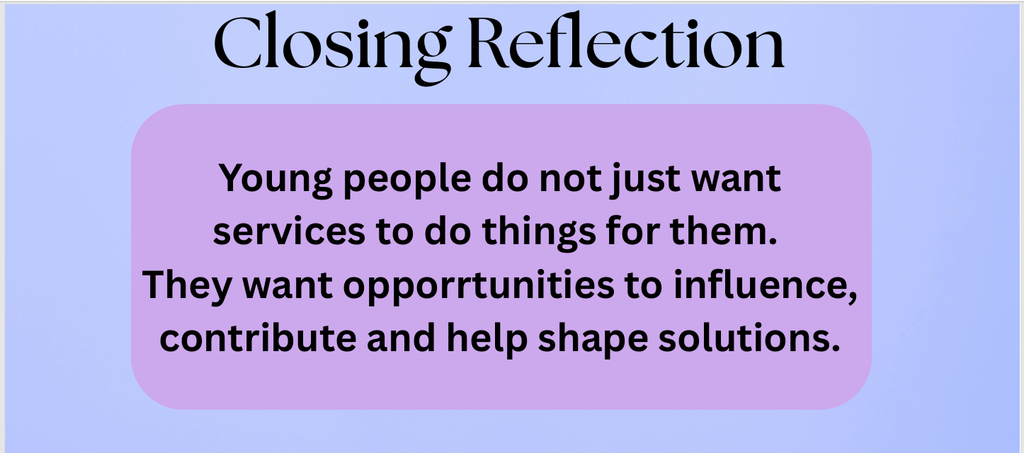
The closing reflection from the presentation captured the point clearly:
Young people do not just want services to do things for them. They want opportunities to influence, contribute and help shape solutions.
The work continues
The assemblies show what can happen when young people are given the space, support and opportunity to explore issues that matter to them, share their experiences and develop their own priorities.
Phoebe and Anex’s presentation was a reminder that youth participation should not end when a meeting or consultation is over. Young people need to be involved in the conversations, decisions and solutions that affect their lives.
TCC will continue working with its Youth Leaders and partners to build on the work already undertaken, and to explore how organisations can support the priorities identified by young people.
The challenge set by Phoebe and Anex is a useful one for all of us: how can we make sure young people are not only listened to, but have a genuine opportunity to shape what happens next?



Responses